
When Has Murder Been This Low?
Some thoughts on historical crime data.

The Council on Criminal Justice released its always excellent report on crime in 2025 a few weeks back and something caught my eye. In the report, CCJ writes “When nationwide data for jurisdictions of all sizes is reported by the FBI later this year, there is a strong possibility that homicides in 2025 will drop to about 4.0 per 100,000 residents. That would be the lowest rate ever recorded in law enforcement or public health data going back to 1900, and would mark the largest single-year percentage drop in the homicide rate on record.”
I’ve written before about how 2025’s murder rate might be the lowest ever recorded, but CCJ’s report drives home how vague the term “ever recorded” can be. There’s a good bit of appropriate analytic uncertainty in the CCJ report that got lost on the other side of the report.
The White House picked up on the CCJ report (sans the estimative caveats), saying “A new report shows the murder rate across the nation’s biggest cities plummeted last year to its lowest level since at least 1900, marking the biggest one-year drop in recorded history.”
They weren't alone in removing uncertainty from the report. For example, CNN also stripped out the caveat and nuance in this chyron.
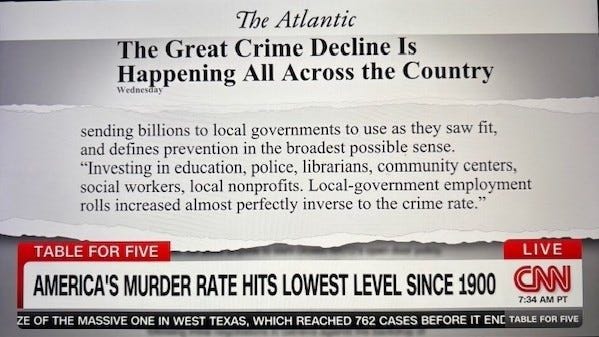
Murder did really fall a ton last year and it fell at the fastest rate ever recorded to likely the lowest murder rate ever recorded. But we don’t know what the murder rate in 2025 was, and that raises an important question: Can we say when the last time that murder was this low in the United States?
The first step towards answering that question is to guesstimate what the nation’s murder rate was in 2025 as a starting point for comparing other years. An exact murder rate is unknowable at this point, and it’s hard to say from current data (hence the caveats in my and CCJ’s analyses).
We do know that the lowest murder rate ever recorded since the FBI started using a consistent methodology is 4.44 per 100k in 2014. Anything below that would be the lowest ever recorded.
I would ballpark the 2025 rate at somewhere around 4.2 (+/- 0.2) per 100k and feel reasonably confident that the FBI’s 2025 crime report will put it around there when released later this year. Where did I come up with that range?
Well, the FBI estimated a murder rate of around 5 per 100k in 2024, but the FBI’s 2024 estimate is almost certainly lowballing the murder rate. I have talked about the FBI’s revision process a lot, but the bottom line is that 2024’s murder estimate is probably too low by around 700 or so murders.
This will get updated when the 2025 estimates are released sometime this Fall, and that’s important becuase when we talk about a 20 percent drop in murder in 2025 we are referencing a 20 percent decline relative to the FBI’s revised murder rate, not the current one that they released last year.
My guess is that the FBI will revise up 2024’s murder rate to around 5.2 per 100,000 based on their recent revision pattern of increasing the previous year’s count up by 700 or so. The FBI initially reported 19,252 murders in 2023 when they initially reported it but increased that count to 19,902 in 2023 when 2024 figures were released in 2025.
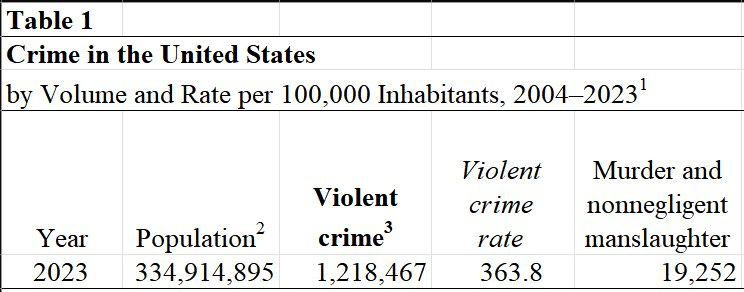
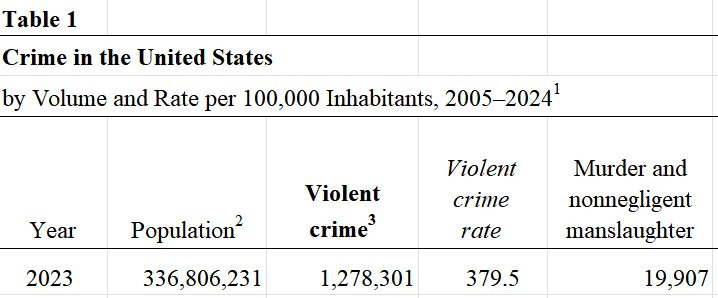
So let’s assume as similar revision for 2024 and count down from there as our starting point .
From there, let’s say murder fell 18 percent in 2025. That’s conservative but not overly so. The Real-Time Crime Index has murder down 19.8 percent through November but we have to account for underreporting potentially making the decline slightly smaller as time goes on and agencies complete their reporting. Additionally, the FBI will revise up their initial 2025 estimate — released August to October 2026 — when they release 2026 data in 2027.
All of which goes to say that I expect the eventually be slightly smaller than the enormous one we have right now though it should stay historically large.
Doing all the math with an 18 percent drop in 2025 to a slightly revised up 2024 rate, therefore, gives us a murder rate of 4.2 per 100,000 last year. I won’t be shocked if it’s a few points on either side of that though, but it’s a good strating point.
With last year’s murder rate guesstimated we can start to try and answer the question: when was murder this low?
The FBI’s national estimates have been largely standardized since around 1960 though the quality of some of that data wasn’t super great in the 60s. Still, I’ve already shown that a murder rate of 4.2 per 100,000 would be the lowest ever formally recorded by the FBI going back to 1960.
The modernity of the FBI’s national estimates mostly dates back to their 1958 report which streamlined the offenses being reported and created true national estimates for the first time. We can guesstimate murder rates before that, but I don’t have much confidence in them and neither should you.
In 1954, the FBI reported 6,850 murders and a murder rate of 4.2 per 100,000 based on data from around 75 percent of the population including nearly 90 percent of cities.
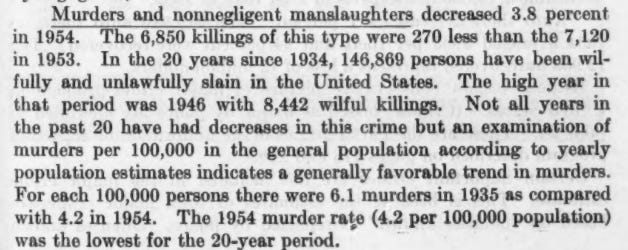
Murder was roughly even in 1955 per the FBI, rose around 1.8 percent in 1956, and fell very slightly in 1957.
If you use the FBI’s estimates from 1957, before they changed up their estimative procedure in 1958, there were 6,920 murders in the US. Doing back-of-the-napkin math on that figure would put the national murder rate that year at right around 4 per 100,000 based on reporting from 83 percent of the population and estimates from non-reporting arears.


When the FBI went back with a new methodology in 1958, however, they looked at data from 1957 again and estimated that the actual 1957 murder rate was at 4.7 per 100,000 with more than 8,000 murders now estimated for 1957.
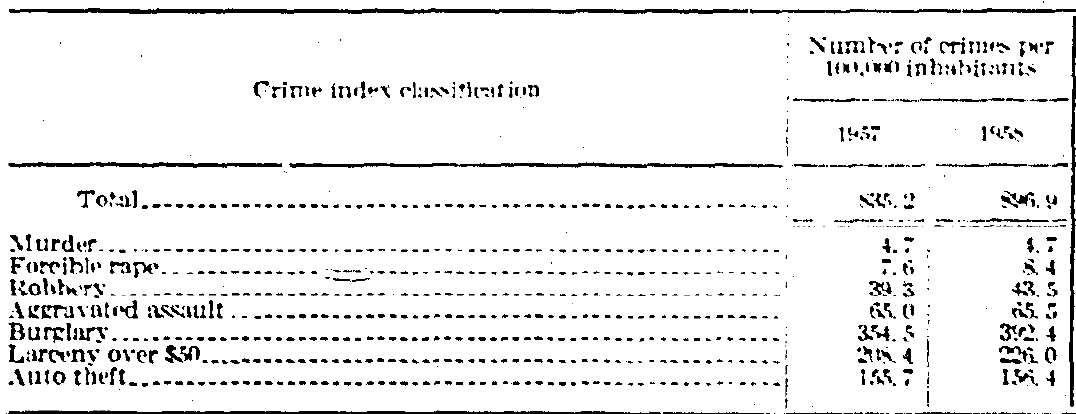
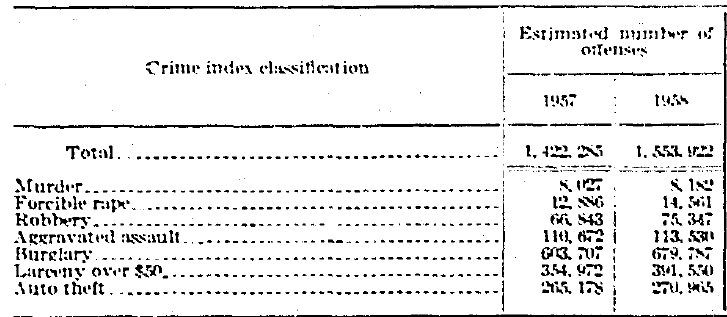
So that 1954 estimate of 4.2 per 100,000 — which used the same methodology as the original 1957 estimate — is probably not super reliable.
There are a few other years where the national murder rate would at or be slightly lower than 2025’s 4.2 per 100,000, but the reliability of data for those years is extremely low.
Indeed, I think we should ignore all murder estimates prior to 1958. If we want to go by just murders from the FBI then we can go back to the early 1930s with estimates that are increasingly less reliable the farther we go back.
I think the safest thing that we can say is that the 2025 murder rate was likely the lowest ever recorded. Three years — 1954 to 1956 — stand out as possibly equal or lower, but the FBI’s methodology those years wasn’t nearly as reliable as it was a few years later.
But what about the data back to 1900?
The US did not formally start systemically measuring murder as a crime until 1930 and there aren’t reliable national estimates until 1960ish. It’s not correct to say anything about the US murder rate prior to 1900 — which isn’t what CCJ is doing.
The CDC has death rate data by cause back to 1900 which you can access (it’s a bit obnoxious) here for data on the national homicide rate that far back. The problem, of course, is that homicides and murders are not synonymous. Every murder is a homicide but not every homicide is a murder.
The FBI's murder rate and CDC's homicide rate almost always move in the same direction with the homicide rate usually a small bit higher than the murder rate. The difference has gotten slightly larger in recent years (and the 2021 FBI estimates are still very flawed), but the trends are identical.
The CDC has relatively complete homicide data back to the 1930s, but reporting was incomplete prior to that. Moreover, research has shown that it was incomplete with a bias towards low homicide states artificially lowering the reported homicide rate before 1930.
The US homicide rate in the early 1900s is reported at right around 1 per 100,000, but the actual rate was probably closer to 7 or 8 per 100,000 according to researchers who have estimated the early 20th century rate. That data was used in the CCJ report, and by other homicide scholars and is generally considered far more reliable than the official data.
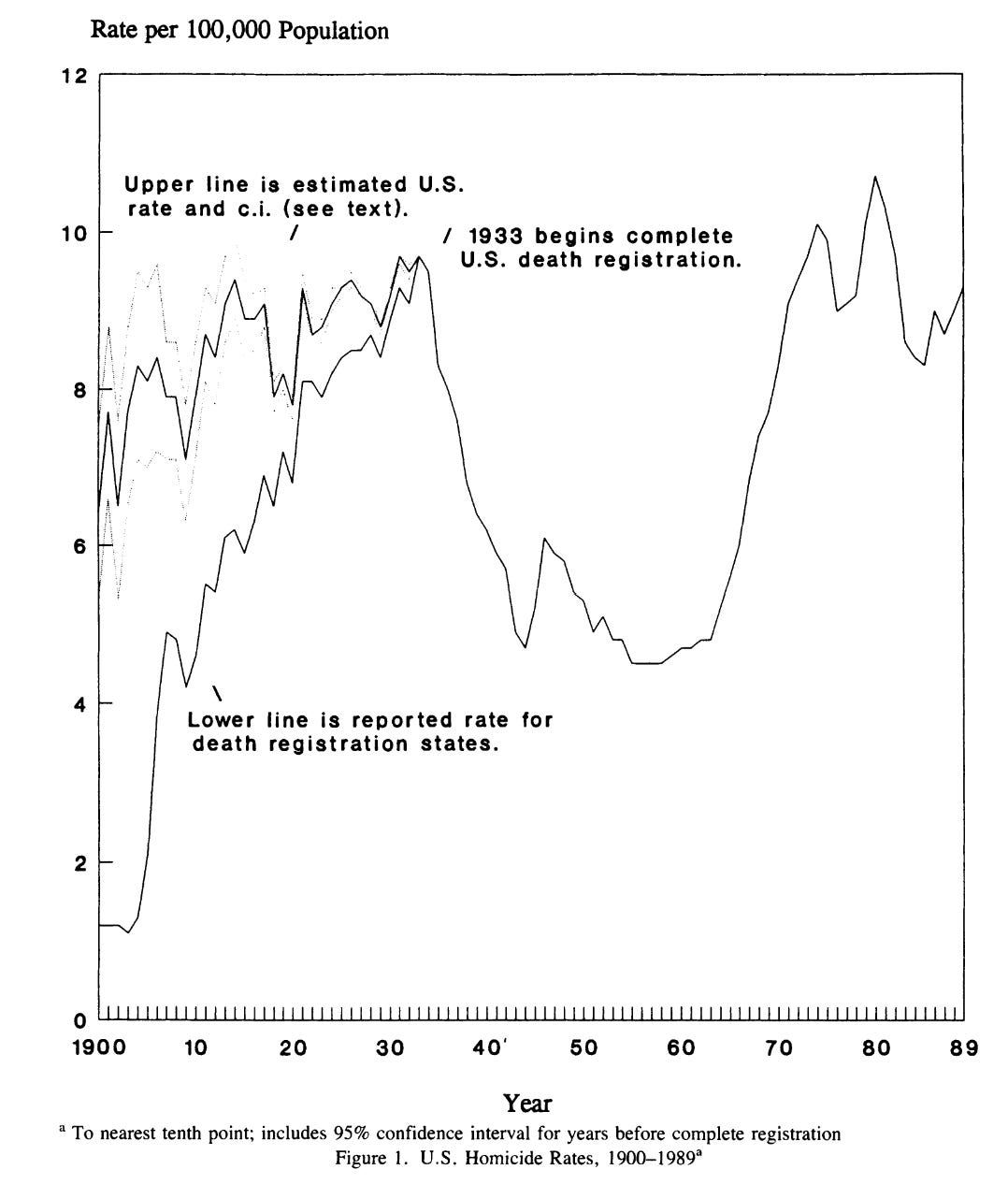
It’s hard to say exactly where 2025’s homicide rate from the CDC will end up. Data through midyear points to a bit more than a 15 percent drop in the national homicide rate in 2025 which would come out to a rate of just around 5 per 100,000. That would be roughly tied with 2014 (4.98 per 100k) as the lowest national homicide rate since the 1950s when it reached 4.5 per 100k in 1955 and 1957.
So what can we say with confidence?
2025 featured the lowest murder rate ever recorded, but our records on murder only really start in 1960.
The drop in 2025 was the largest one year drop ever recorded and that’s true of both murder and homicide. The CDC’s homicide data back to 1900 puts the 2025 decline as the largest ever at 15 percent, supplanting a 14 percent drop in 2002 (because of 9/11) and 13ish percent drops in 1935 and 1945.
2025 was likely not the lowest homicide rate ever recorded but it was likely right around the lowest homicide rate in 70 or so years. The lowest homicide rate ever recorded was in 1903 (1.1 per 100,000) though that was derived from data from just 10 states (CT, IN, MA, ME, MI, NH, NJ, NY, RI & VT) plus DC and research shows it was a bad undercount.
In my opinion, we can’t really say when the US murder rate was this low prior to 1960. The FBI recorded a similarly low murder rate in 1954 but that was a flawed figure that is inconsistent with our current estimative methodology.
It’s plausible that we would have had a lower murder rate at some point in the 1950s with a consistent methodology extended to then. It’s also plausible that 2025 would have had the lowest murder rate of any year since before the turn of 20th Century with a consistent methdology.
As is frequently the case with flawed crime data, we just can’t say for sure.
New On The Jeff-alytics Podcast
This week’s I talked with Orleans Parish District Attorney Jason Williams about the challenges of balancing crime reduction with justice in a place that has all to often had neither. We also talk about how the innovative “N.O.D.I.C.E” program addresses the geographic footprint of crime in New Orleans. Jason emphasizes the importance of data-driven decision-making, community engagement, and the myriad of challenges stemming from non-unanimous juries in Louisiana. Give it a listen below or wherever you get your podcasts!
Also check out these recent great guests!
Jens Ludwig on reducing gun violence in America.
Jerry Ratcliffe on bringing science to policing.
Dara Lind on crime and immigration.
Is Real-Time Crime Index going to be updated in 2026?
Ok ok ok. The rate looks like it’s down and going downer. Please break down who it is who are not killing each other at the same rate and where they are located. Is it the citizens of Vermont and Montana or Iowa or the citizens of Chicago and Memphis and DC? Maybe you can wake up the national media and force them to ‘notice’ and address and lament
the American Slaughter that’s taken the lives of 10,000 young black men in Chicago alone since 1995 — and at least 150,000 nationwide since then.